February 8th (by Karen Holm)
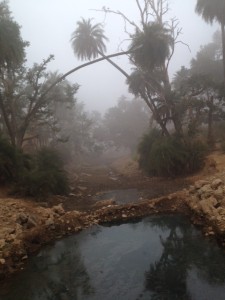
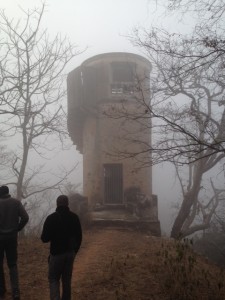
It was a misty morning… cool but pleasant. We headed out by bus to Bandipul and then on foot. Here there are 2 tigers, 1 male and 1 female, reside. A female sambar (Cervus Unicolor) and several langurs (Semnopithecus entellus) watched as we took off down the trail following the river. After a short hike through and up steep rough terrain (nothing we couldn’t handle) in the forest we spotted tiger scat that contained tan hair which was determined to be sambar hair, the principle diet for the tigers. If the hair was white we would know that the diet was the common langur. This scat can be sent back to the lab to be analyzed to determine food habits. We proceeded to the top to find the watch tower and a tree that had scrapings on the trunk from the sambar and tiger claw scrapings just above. The sambar will scrape when their antlers are in velvet and ready to be removed driven by hormones. The watch tower was used for shooting purposes. Bait would be tied out and attacked and then the shooter would have their opportunity. On the way back down we came across a different scat that was reddish in color and smaller in size compared to the tiger scat earlier. It was porcupine because of the color and the acacia bark is the main diet of the Indian porcupine. As we neared the bus we found the langurs waiting in the trees at the bottom to have their pictures taken.
After visiting Bandipul and a short break we resumed in the lecture room for a discussion on human-wildlife-livestock conflict in Sariska National Park by the director of the park. We learned that some people are compensated for cattle loss due to tigers and others are not depending on if they are lost in the park. Also the main problem in the park is lack of food and water due to the severe drought conditions especially this year.
Next lecture was on rangelands and the definition of such and examples across the world including grasslands, savannas and scrublands. We discussed major threats to these lands including climate change, fragmentation of the lands, human-wildlife conflict, land degradation and disease. This lead to a discussion on common emerging diseases occurring around the world affecting wildlife and livestock including Foot and Mouth disease, Rinderpest, Rabies.
After lunch we headed out for a 2 hour open vehicle drive through Sariska Tiger Reserve to Sanswardi Fort. This fort was built about 300 years ago. The Mughal Emperor kept his brother imprisoned there for several years until he was sent back to Delhi and was beheaded. There are 100 year old palm trees all around the grounds that grew from seeds thrown by the soldiers guarding. There are old ruins that are of Chinese architecture that are unknown how and when these were put up. It was an amazing site to go to the very top of the fort and look around at the beautiful 360 degree view of the plateau. Langurs and sambar were spotted on the drive back. There are 3 settlements around the fort in a village, known as the Sanswardi village.
After a short break of tea and cookies we had a lecture by Professor Sankar on the biology and behavior of the ungulate species found in the park including Sambar, Chital (Axix axis), and Nilgai (Boselaphus tragocamelus). Also 2 primate species, the common langur and Rhesus macaque (Macaca mulatta) were discussed along with the Indian porcupine and wild pig (Sus scrofa). We concluded the day with a delicious Indian buffet dinner.
Leave a Reply